THE ASSUMPTION
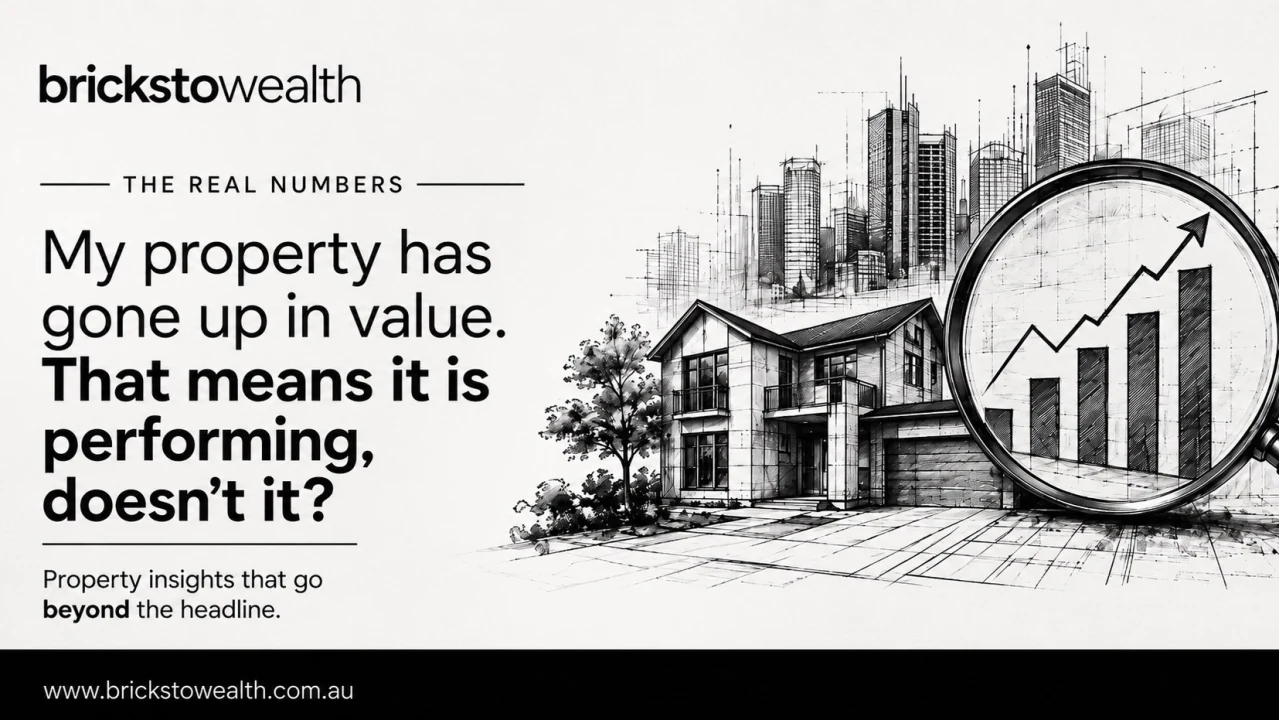
I have looked at recent sales, checked the median price growth, and read a few reports. I know enough about this suburb to make a good decision.
THE REAL NUMBER
Median price data tells you what happened. It does not tell you why it happened, whether it will continue, or whether the suburb sitting two kilometres away would have served you significantly better. The difference between a good suburb and the right suburb is measured in data points most investors never look at.
What publicly available data does not show you
The information most investors use to assess a suburb, median prices, recent sales results, and general growth percentages, is widely available and therefore already priced into the market. By the time a suburb appears on a hotlist or features in a weekend property supplement, the early growth phase is typically behind it. Investors buying on that information are buying a lagging story, not a leading one.
The data that actually predicts suburb performance sits beneath the headline numbers. Vacancy rate trends over rolling quarters rather than a single point in time. The ratio of owner-occupiers to investors, because suburbs with higher owner-occupier demand have a structural price floor that investor-heavy markets lack. Infrastructure spending committed but not yet delivered, and changes in population, particularly where there is an influx of younger people. Days on market trending downward before prices move. These are the signals that precede performance, not the ones that follow it.
Reading those signals correctly requires both the data sources and the experience to know what the combination means. A low vacancy rate in isolation is positive. A low vacancy rate combined with rising rental prices, a falling days-on-market figure, and a committed infrastructure pipeline in a suburb with limited new supply is a substantially more encouraging finding.
The cost of buying in the wrong suburb
The difference between a suburb that delivers 5 percent annual growth and one that delivers 7 percent over a ten-year hold on a $700,000 purchase is not marginal. At 5 percent, that property is worth approximately $1,140,000 after ten years. At 7 percent, it is worth approximately $1,377,000. That $237,000 gap, on a single property, is the difference between having enough equity to fund a third purchase or not. It is the difference between a portfolio that creates genuine financial freedom and one that gets an investor partway there. Achieving outperformance in the first 1-3 years enables fast tracking the development of a property portfolio that can be truly life changing.
Suburb selection is the decision that determines more of the outcome than almost any other in property investment. Getting it right is not about luck or instinct. It is about looking at the right data, in the right combination, before the rest of the market has reached the same conclusion. The investors who consistently buy in the right place before the move happens are not guessing. They are working from a more complete picture.
The question worth sitting with
Most investors feel confident in their suburb research because they have done more than most. But the relevant comparison is not other investors. It is the full data picture that a disciplined, systematic analysis would produce. The gap between those two things is where performance is won or lost.
THE REAL NUMBERS QUESTION
Do you know which data points actually predict suburb performance, and are you looking at them before you decide?
brickstowealth builds its suburb selection process on data that goes well beyond what most investors ever access. If you want to understand what that analysis looks like for your next purchase, the conversation starts here.
Book a free consultation at brickstowealth.com.au.
Take the Next StepIf you're serious about investing...
Let's apply this to your own goals and numbers. Book a strategy call with Tim.
Buying your family home? Discover how we protect home buyers from emotional overpaying: Home Buyer's Agent Service →